
Little by little, the dystopian worlds of science fiction are starting to look like our reality: more inequality, an environmental crisis and a feeling that we are going backwards.
Many people close to me blame technology for this, but I don't see it that way. A hammer can build a house or tear it down, and the same goes for information technology. As the historian Melvin Kranzberg put it, "technology is neither good nor bad; nor is it neutral" [1]. The real question is not whether we use technology, but who controls it, for what ends and who it benefits. Today, far too often, it benefits very few.
I'm not writing to complain, because that doesn't achieve much. Instead, I'd rather show you an alternative vision: solarpunk, a future where animals, plants and people can live together in harmony.
What is solarpunk?
Ever since I was a kid I've cared about social causes and punk music. Over time I discovered science fiction and, with it, cyberpunk: a fascinating genre, but one without hope. A while later I came across solarpunk, and I finally had a way of imagining the future that brought together everything I care about.
Solarpunk is an artistic, cultural and political movement that asks a very simple question: what would a future worth living in look like? And, above all, how do we start building it today?
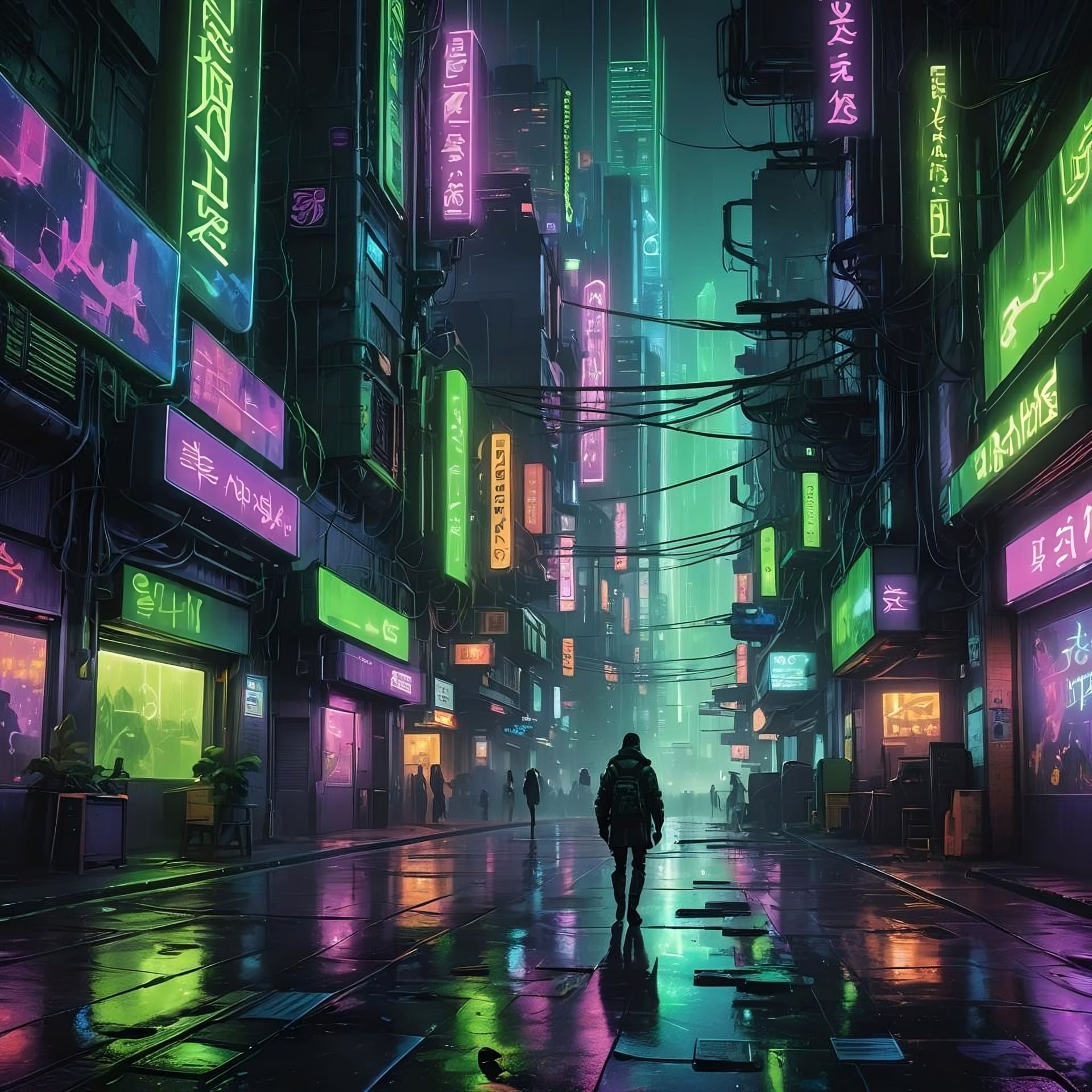
The name was born as a response to cyberpunk, the genre that showed us neon cities run by megacorporations, pollution and people isolated in front of screens. Solarpunk takes another path. Solar because it bets on clean energy and a life in balance with nature. Punk because it doesn't wait for permission: it is rebellious, practical and handmade, with a "do it yourself" and "let's do it together" attitude.
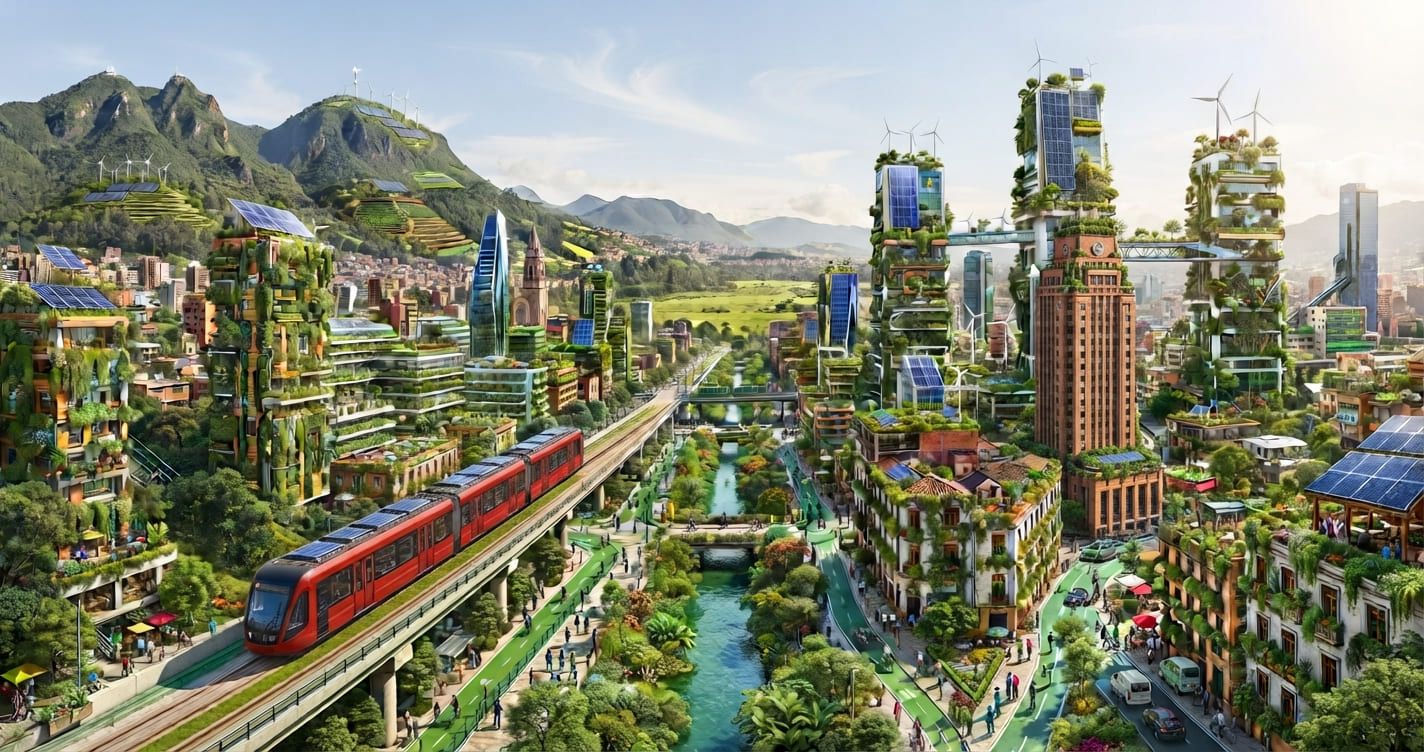
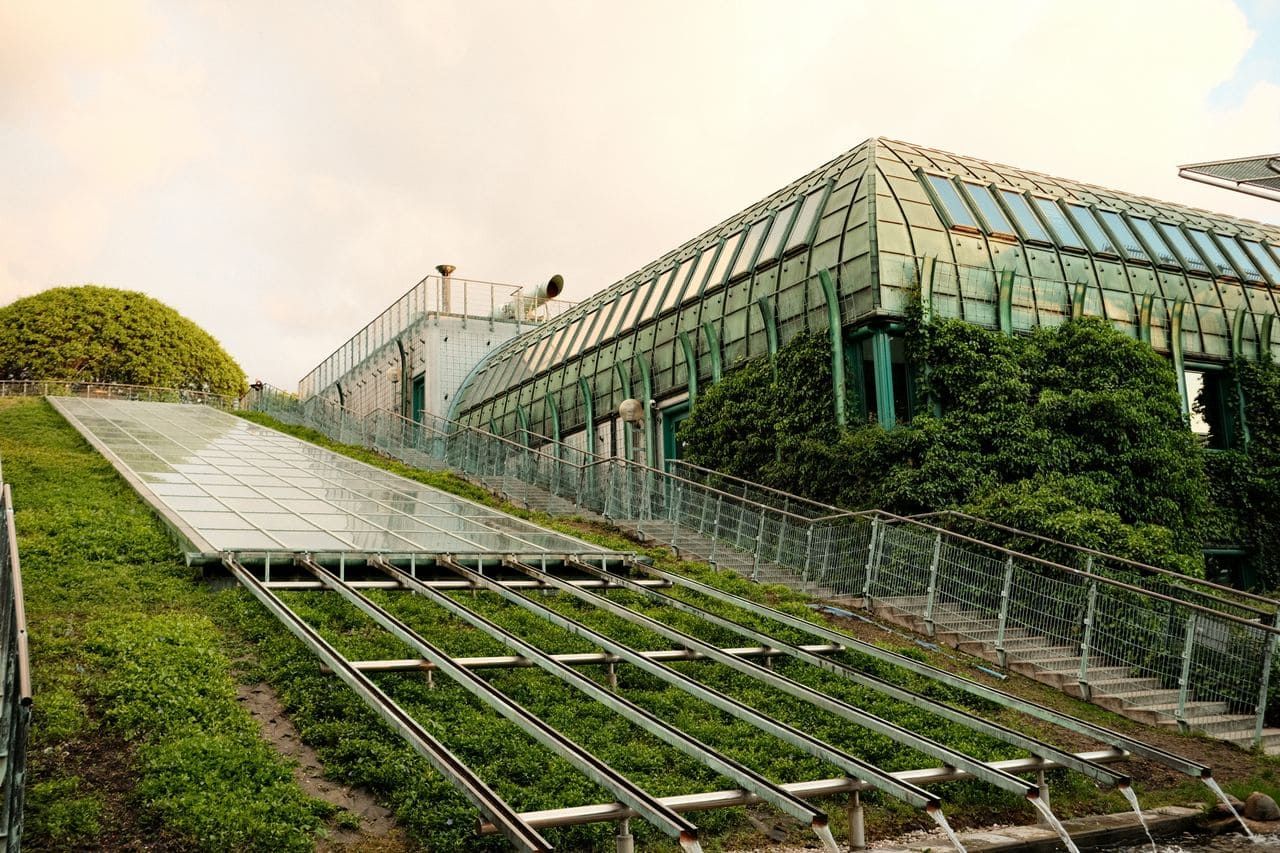
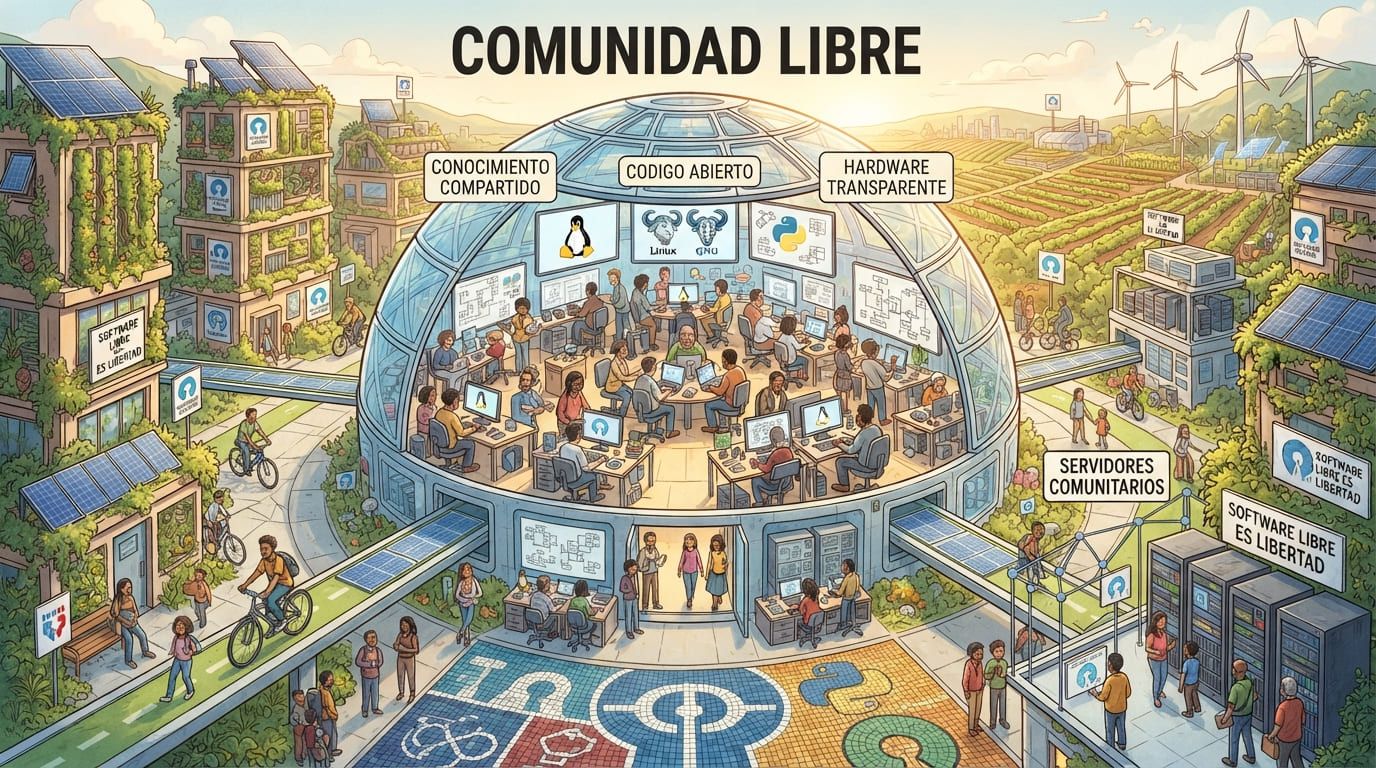
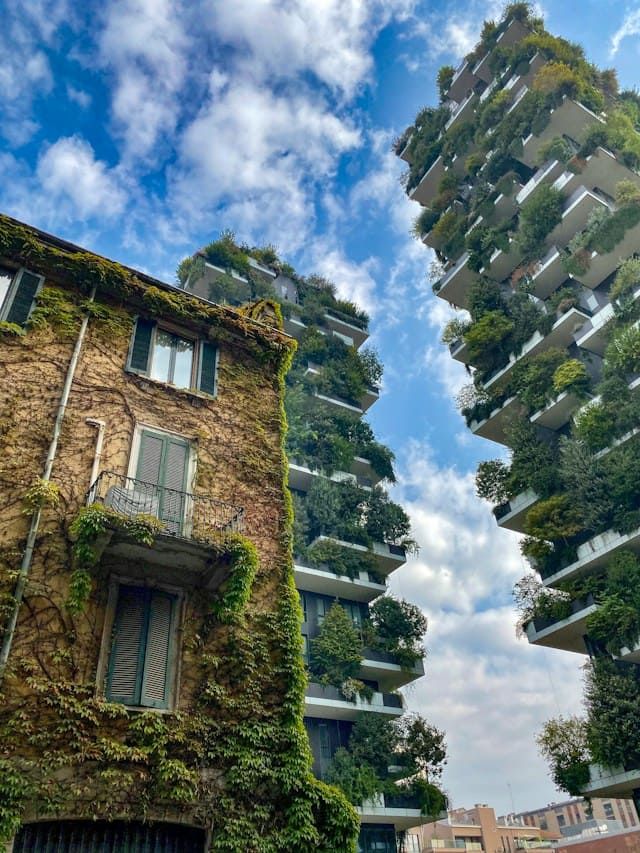
Picture a city like Bogotá with gardens on its rooftops, solar panels on its roofs, clean rivers, bicycles instead of traffic jams and neighborhoods where people share tools, seeds and knowledge.
What solarpunk is not
Like many ideas, solarpunk is easy to misunderstand. These are some common misconceptions:
It's not just an aesthetic. Online you'll find plenty of images of white cities full of plants and solar panels. They're beautiful, but solarpunk is not about what the future looks like; it's about how we live in it and who gets to decide.
It's not rejecting technology. It's not about going back to the caves or throwing away your phone. It's about using technology differently: open, repairable, consuming less and serving people.
It's not "green consumption". Buying a product with an eco-friendly label doesn't make you solarpunk. Many companies paint the same old thing green. Solarpunk has more to do with consuming less, repairing, sharing and producing as a community.
It's not a naive utopia. It doesn't deny the problems; it starts from them. The difference is that, instead of giving up in the face of collapse, it asks what we can do with what we have at hand.
Why it matters
For years, science fiction has mostly shown us dark futures: polluted cities, governments that watch everything, corporations more powerful than countries. Those stories work as warnings, but they have a side effect: they get us used to thinking that this is the only possible future.
And what we can't imagine, we will hardly build. If all we see is collapse, we end up believing there's nothing to be done, and that resignation is very convenient for those who benefit from things staying the same.
Solarpunk breaks that cycle. It reminds us that the future is not written and that hope is not naivety, but a decision. Imagining a better future is the first step to start building it.
Solarpunk in practice
The best thing about solarpunk is that you don't have to wait for the future to arrive. People and communities are already practicing it, often without knowing it has a name:
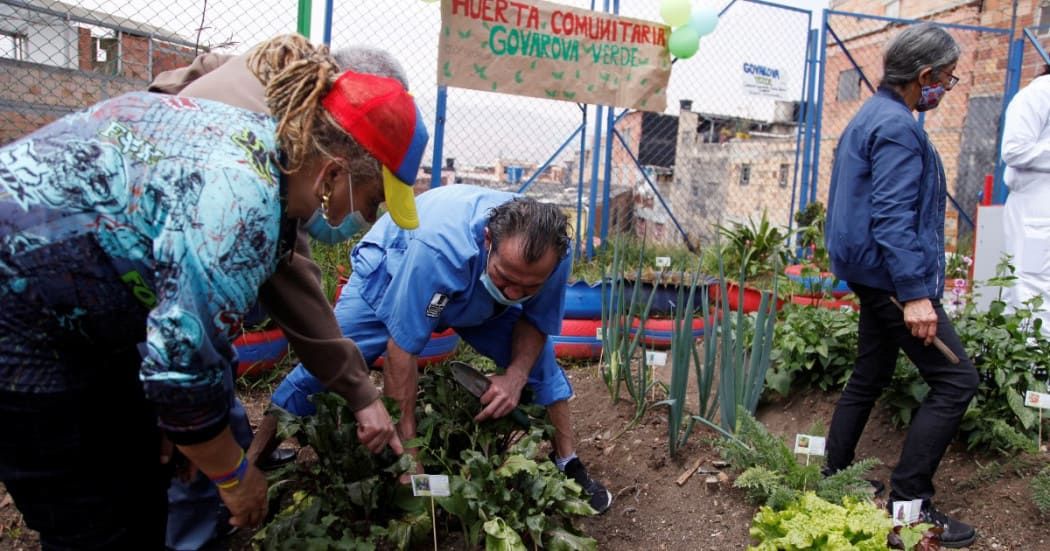
- Urban and community gardens: rooftops, balconies and abandoned lots turned into places where food is grown and community is woven.
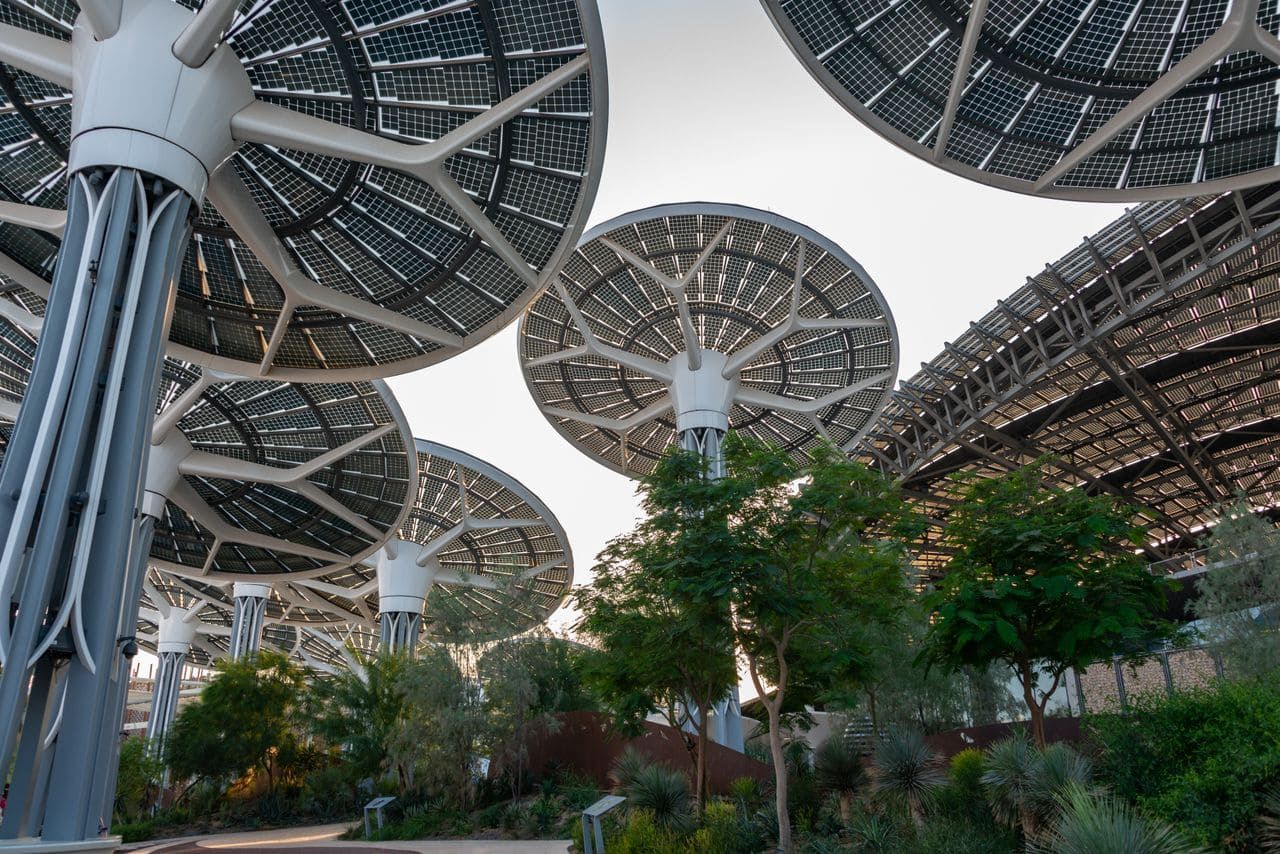
- Your own energy: small solar systems to charge devices, power sensors or depend less on the grid.
- Free software and self-hosting: using tools that don't spy on you and running your own services instead of handing everything to the big platforms. This very blog runs on a server I manage myself.
- Repair instead of throwing away: repair cafés, tool libraries and the idea that things should last and be fixable.
- Citizen science: people measuring the air quality, water or climate of their neighborhood and sharing the data openly.
- A lighter web: sites that use less energy. A famous example is Low-tech Magazine, whose solar version runs on a panel and goes offline when there isn't enough sun [2].
None of these actions will change the world on its own. But together they show that another way of living is not only possible: it's already happening.
A view from Latin America
Solarpunk is not just a trend arriving from abroad. One of the first anthologies of the genre was published in Brazil in 2012: *Solarpunk: Histórias ecológicas e fantásticas em um mundo sustentável*, edited by Gerson Lodi-Ribeiro [3]. Years later it was translated into English [4] and helped the movement become known around the world.
But the connection goes beyond a book. In our region, many solarpunk ideas have been practiced for generations, even if we never called them that: the minga, where the community comes together to work for the common good; home gardens and the exchange of native seeds; the Indigenous and peasant knowledge of how to care for land and water. The rebusque, getting by on your wits, and the ingenuity to repair what others would throw away are also, in their own way, very solarpunk.
That's why I believe Latin America has a lot to contribute to this vision. It's not about copying the future imagined elsewhere, but about building our own, with our biodiversity, our knowledge and our way of making community.
We carry a new world here, in our hearts. That world is growing in this minute [5].
— Buenaventura Durruti
What's coming on this blog
This is one of my goals with BogDev: to democratize knowledge so that all of us can have a better quality of life. I don't want to stay in theory. That's why I'll document my own sustainable projects here, starting with a hydroponic garden at home, and later air quality sensors, connected gardens and technology anyone can replicate in their neighborhood. I also want to write about software development that serves people, animals and nature: open tools that solve real problems instead of just making money for a few. I'll share the costs, the parts, the code and the mistakes too, because we learn as much from those as from what goes right.
Solarpunk isn't built alone, so this is an invitation. Do you have a garden, a project, an idea or just curiosity? Write to me, leave a comment or follow the blog on the fediverse as @bogdev@api.bogdev.com.co. And if this text got you thinking, share it with someone who also believes another future is possible.
That new world we carry in our hearts won't arrive on its own. Let's start planting it.
References
- TECHNOLOGY AND CULTURE · 1986
Kranzberg, M. (1986). Technology and history: "Kranzberg's laws". Technology and Culture, 27(3), 544–560.
- 2018
Low-tech Magazine (2018). How to build a low-tech website?
- EDITORA DRACO · 2012
Lodi-Ribeiro, G. (Org.) (2012). Solarpunk: Histórias ecológicas e fantásticas em um mundo sustentável. Editora Draco.
- WORLD WEAVER PRESS · 2018
Lodi-Ribeiro, G. (Ed.) (2018). Solarpunk: Ecological and fantastical stories in a sustainable world (F. Fernandes, Trad.). World Weaver Press.
- TORONTO STAR · 1936, 18 AGO.
van Paassen, P. (1936, 18 ago.). Entrevista con Buenaventura Durruti. Toronto Star.
- 2008, 27 DE MAYO
Republic of the Bees (2008, 27 de mayo). From steampunk to solarpunk.
- PROJECT HIEROGLYPH, ARIZONA STATE UNIVERSITY · 2014, SEPTIEMBRE
Flynn, A. (2014, septiembre). Solarpunk: Notes toward a manifesto. Project Hieroglyph, Arizona State University.
Reading path · DIY
Support the blog
Support my work
If this content helped you, buy me a coffee.

Conversation · no comments
Comments
Leave a comment or reply to other readers.
No comments yet. Be the first to comment!